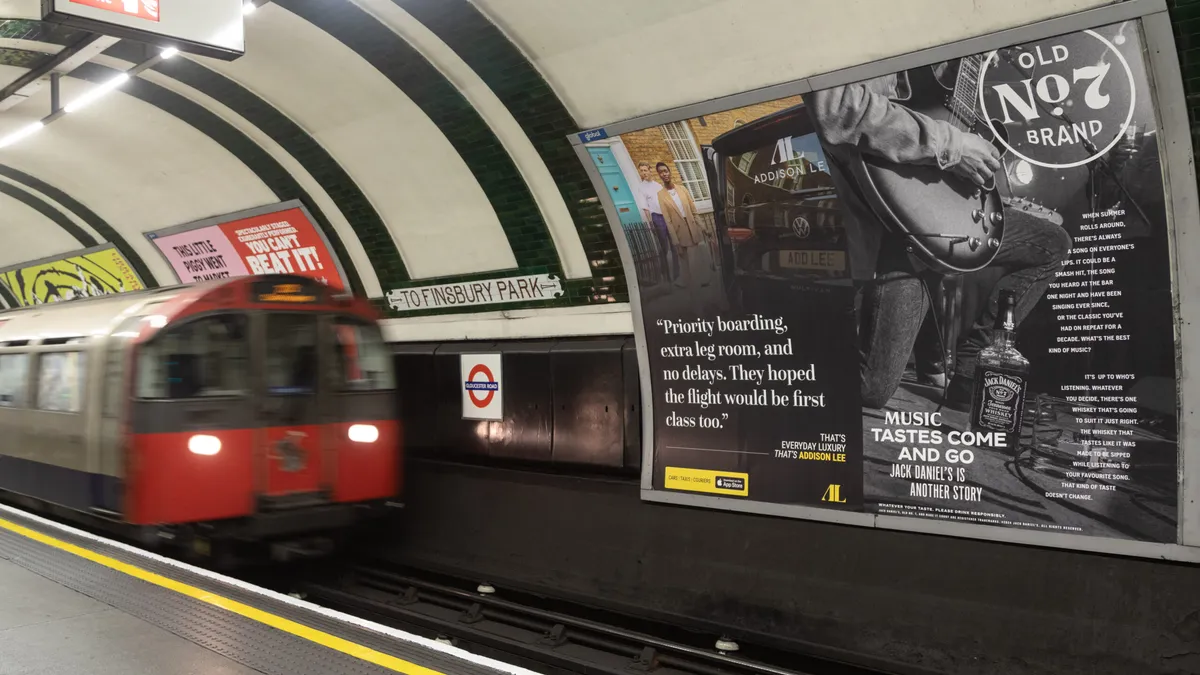
A London Underground advert has a physical context that can influence how people respond to it.
Passengers might see a campaign while arriving at work in the City, heading towards the West End, waiting on a platform or travelling home in the evening. The same advertising message will not always be equally relevant in each of those situations.
Contextual creative takes these differences into account.
It means shaping the advert around the location, passenger journey, advertising format or moment in which it appears. This can be as simple as mentioning a nearby store or adapting a digital advert for the morning commute.
For brands planning London Underground advertising, this creates an opportunity to make the media placement part of the creative idea rather than treating it simply as somewhere to display an advert.
Start With the Station
Location is one of the most useful forms of context on the Underground.
Individual stations connect with very different parts of London and attract different mixes of journeys throughout the day.
Oxford Circus sits at the heart of a major retail district. Bank and Monument serve the City of London. Leicester Square provides access to theatres, cinemas, restaurants and nightlife. King's Cross St Pancras combines Underground journeys with national and international rail connections.
Creative can acknowledge these surroundings.
A retailer advertising at Oxford Circus could direct passengers towards its nearby store. A theatre campaign at Leicester Square could reference that evening's plans. A restaurant could tell passengers that its nearest location is a short walk from the station.
These details give the placement a practical connection with what the passenger is doing.
The important distinction is that station targeting determines where the advertising appears, while contextual creative determines how the message uses that location.
Consider Where Passengers Are in Their Journey
Context also changes within the station.
A passenger entering through a ticket gate is moving through the environment quickly. Someone standing on a platform may have several minutes before the next train. Inside the carriage, passengers can spend much longer alongside the advertising.
Each situation calls for a different approach to creative.
Ticket Halls and Gateways
Advertising around ticket halls and gateways sits within a fast-moving part of the journey.
Messages need to register quickly. Strong branding, a short headline and one clear idea usually make better use of the space than dense copy.
Location-based information can be particularly useful around station exits. Restaurants, shops, attractions and entertainment venues can tell passengers that they are nearby, giving the advertising immediate relevance as people decide where to go next.
Platforms
Platforms create more dwell time.
Passengers are waiting rather than continuously moving through the station. Large cross-track formats also give brands considerable visual space.
This can support bold brand creative, product launches and campaigns where an image needs room to make an impression.
The passenger's next destination can provide additional context. Entertainment campaigns can speak to evening audiences, while travel, retail and food brands can align messages with the journeys commonly made through selected stations.
Escalators
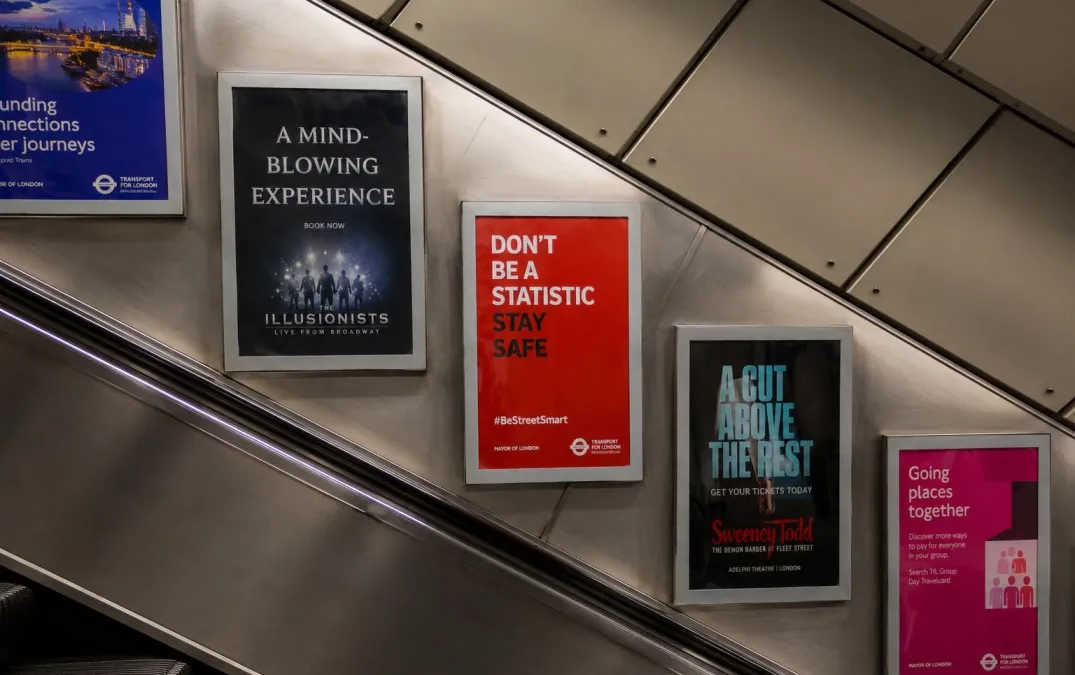
Escalators offer an unusual creative advantage because passengers move past advertising in sequence.
Instead of treating every panel as an isolated advert, brands can develop an idea across several placements. One message can lead into another, a product range can unfold panel by panel, or repetition can reinforce a simple campaign line.
Digital Escalator Panels provide further flexibility through motion and multiple creative executions.
This is a good example of contextual creative coming from the physical behaviour of the format, rather than simply the station location.
Inside the Carriage
In-carriage advertising creates a longer viewing opportunity.
Passengers may encounter Tube Car Panels repeatedly during the same journey, particularly when seated or standing nearby. This gives brands more room for copy, product information or an idea that rewards a longer look.
Creative designed for a ticket gateway should therefore not automatically be reproduced inside a carriage.
The environment has changed, so the amount of information the advertising can comfortably communicate has changed with it.
Advertisers can explore the available London Underground advertising formats when deciding how creative should work across different parts of a passenger journey.
Use Time as Part of the Campaign
Digital Underground advertising allows context to change throughout the day.
This can be useful when a product or message has a natural relationship with time.
A coffee brand can focus on breakfast during the morning commute. A food delivery service can move towards dinner messaging later in the day. Entertainment brands can promote plans for that evening, while retailers can adapt messaging around trading periods or seasonal activity.
The value comes from matching the message with a recognisable passenger need.
There is little benefit in producing several versions of an advert simply because the screen allows it. Each creative variation should have a clear reason to exist.
Our guide to digital advertising on the London Underground covers the digital formats available across the network and where they can fit within a wider Tube campaign.
Use London Without Forcing the Reference
London gives advertisers plenty of material for contextual creative.
Station names, neighbourhoods, landmarks and familiar journeys can all become part of an idea. The strongest executions tend to use references passengers understand immediately.
For example, a campaign near King's Cross does not need a complicated joke about King's Cross to be contextual. Simply telling passengers that a destination is three minutes from the station may provide more value.
The same principle applies to localised copy.
A brand running across ten stations could keep the same campaign design while changing one useful detail for each location:
- Nearest branch
- Walking distance
- Relevant product
- Local destination
- Direction of travel
- Area-specific message
This keeps production manageable while giving individual placements greater relevance.
Build Context Around the Format
One of the more useful ways to improve Underground creative is to consider what the advertising format naturally allows people to do.
A large cross-track poster provides scale and visibility from the opposite platform.
Escalator panels provide sequence.
Tube Car Panels provide reading time.
Digital screens provide motion and scheduled creative.
Ticket gateways place the message directly within passenger movement.
These characteristics should influence the creative concept from the beginning.
A sequential idea designed for escalator panels may lose its meaning when reduced to one poster. A detailed piece of copy that works inside a carriage may be difficult to process while walking through a ticket hall.
This is why format selection and creative development work better when planned together.
Keep Contextual Campaigns Recognisable
A contextual campaign does not require a completely different advert at every station.
In many cases, changing one or two elements is enough.
The logo, typography, visual identity and central campaign idea can remain consistent. Headlines, products, local information or calls to action can then change where there is a genuine contextual reason.
Imagine a restaurant chain running across several central London stations.
The overall design remains identical, but each execution displays the nearest restaurant and walking time. Someone leaving Tottenham Court Road receives information relevant to Tottenham Court Road. A passenger at Victoria sees the location relevant to Victoria.
The campaign remains recognisable across London while individual placements become more useful.
This approach is particularly valuable for brands with several stores, venues or service locations across the capital.
Avoid Context That Adds No Value
Putting a station name into a headline does not automatically make an advert more relevant.
Good contextual creative gives the passenger something meaningful.
That might be useful information, a timely product, a connection with their journey or a creative idea that works specifically because of where it appears.
Forced local references can have the opposite effect. They can make advertising feel gimmicky and distract from the main message.
The context should therefore pass a simple test. Would the advert lose something meaningful if it appeared somewhere else?
A message showing the walking distance to a nearby shop clearly depends on location. A sequence designed around an escalator depends on the format. Breakfast messaging shown during the morning commute depends on timing.
These are meaningful uses of context.
Plan Media and Creative Together
Contextual creative is most effective when it starts during media planning.
Station selection can consider the surrounding area and the types of journeys taking place there. Format selection can account for passenger movement and dwell time. Digital scheduling can identify moments where a different execution would genuinely improve relevance.
Creative can then be developed around those decisions.
This approach is especially useful when a campaign combines several Tube advertising formats. A large platform poster, escalator sequence and carriage panel do not need to communicate in exactly the same way. They can perform different jobs while retaining one recognisable campaign identity.
For advertisers, the practical opportunity is straightforward. Use location for local relevance, platforms for dwell time, escalators for sequence, carriages for deeper messaging and digital screens when timing genuinely changes the message.
That is where contextual creative adds value to a London Underground campaign. It connects the advertising idea with the way people actually experience the Tube, making each placement feel considered rather than simply booked.
Latest News

07 Jul 2025 · 4 minute read
by Penny Hargreaves
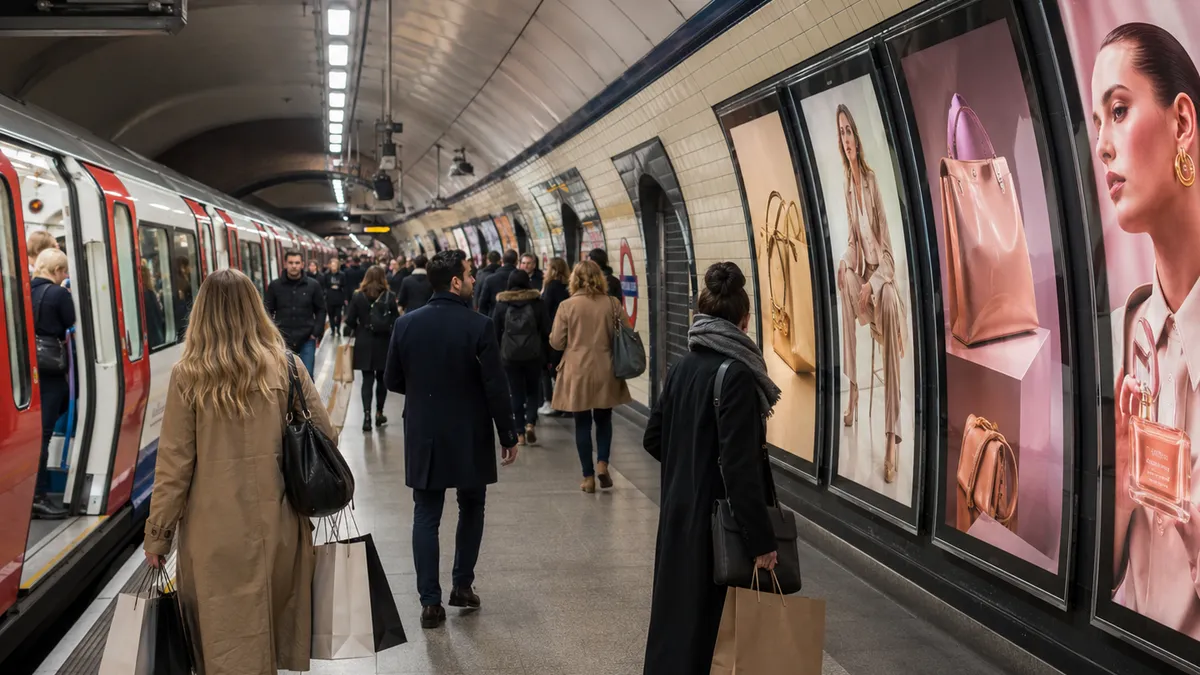
How London Underground Ads Shape Daily Habits and Influence Commuters
Our Valuable Clients, Past and Present


Schedule a call
Pick a date and time for a call that suits you.
We can go through all the available format options and any other questions you have about successfully launching your next advertising campaign.
Launch Your Tube Campaign Today!
Get your brand in front of millions of Londoners and tourists as they move through the city. Just fill in your details on the form to advertise on the London Underground and our expert team will be in touch to kickstart your journey towards standout, high-impact results.
Join thousands of brands that stand out and connect with the transport network’s users.