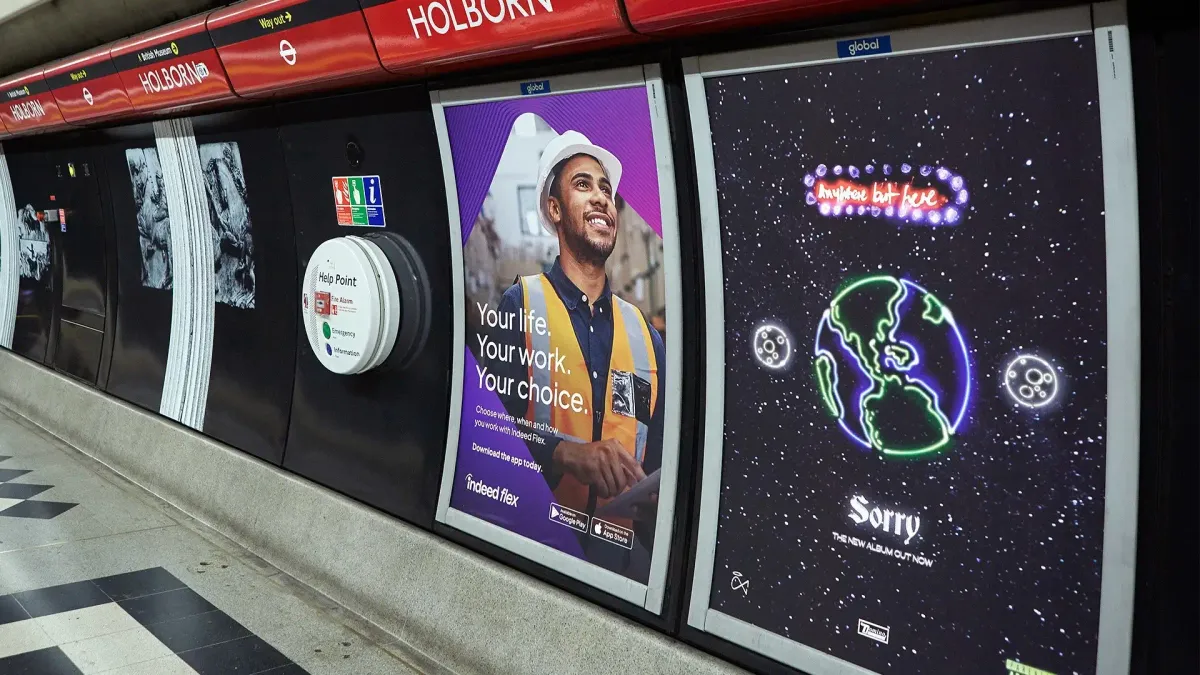
Programmatic DOOH (pDOOH) is transforming London Underground advertising by turning one of the world’s busiest transport networks into a real-time, data-driven, and automated media channel. Instead of booking Tube ads weeks in advance through manual deals, advertisers can now buy, adjust, and optimize campaigns dynamically, much like online digital ads.
Here’s a clear breakdown of how this transformation is happening.
1. From Static Buying to Real-Time Trading
Traditionally, London Underground advertising was:
- Booked in advance
- Fixed for set durations (2–4 weeks or longer)
- Managed manually through media owners
Now, with programmatic DOOH, advertisers use automated platforms (DSPs) to:
- Buy ad space instantly
- Adjust campaigns in real time
- Pause or restart ads based on performance or conditions
This shift makes Tube advertising more flexible and responsive, especially in high-traffic environments like stations and platforms.
2. Smarter Targeting Inside the Underground Network
Programmatic technology allows advertisers to move beyond “one-size-fits-all” messaging.
On the London Underground, campaigns can be targeted using:
- Time of day (rush hour vs off-peak)
- Location (specific stations or lines)
- Audience flow (commuters, tourists, students)
- External conditions (weather, events, travel disruptions)
For example:
A coffee brand can automatically trigger ads during cold mornings at major commuter stations.
This makes underground advertising more relevant and efficient than traditional static placements.
3. Dynamic Creative That Changes in Real Time
One of the biggest innovations in pDOOH is dynamic creative optimization (DCO).
On the London Underground, this enables:
- Weather-based messaging (hot drinks vs cold drinks)
- Live countdowns for events
- Train-arrival-triggered ads
- Context-based messaging depending on station activity
A real-world example includes campaigns where ads change based on train arrivals or commuter movement patterns, making messages feel timely and interactive.
4. Integration with Major Programmatic Platforms
London Underground inventory is now connected to global programmatic ecosystems.
Media owners and partners integrate with platforms such as:
- DSPs (Demand-Side Platforms)
- SSPs (Supply-Side Platforms)
- DOOH exchanges like VIOOH and other programmatic marketplaces
This means advertisers can buy Tube screens alongside:
- Online video
- Mobile ads
- Connected TV
As a result, underground advertising becomes part of a fully omnichannel campaign strategy, not an isolated channel.
5. Better Measurement and Accountability
One of the biggest transformations is in measurement.
Traditional underground advertising mainly provided:
- Estimated footfall
- Basic exposure counts
Programmatic DOOH adds the following:
- Real-time impression reporting
- Campaign delivery tracking
- Location-based exposure analysis
- Cross-channel attribution (linking exposure to digital behaviour)
Advertisers can now better understand how Tube ads influence:
- Website visits
- Search behaviour
- Store visits
This makes ROI clearer and easier to justify.
6. More Efficient Use of High-Value Space
London Underground is one of the most premium OOH environments in the world, with millions of daily journeys across stations and platforms.
Programmatic buying improves efficiency by:
- Reducing wasted impressions
- Allowing budget optimisation in real time
- Filling unsold inventory automatically
- Increasing accessibility for smaller brands
This also means premium stations are no longer reserved only for large & long-term advertisers.
7. Faster Campaign Activation
Previously, launching a tube campaign could take weeks due to the following:
- Negotiations
- Print schedules
- Installation timelines
Now, with pDOOH:
- Campaigns can launch in hours or days
- Creatives can be swapped instantly
- Budget can scale up or down dynamically
This speed is crucial for:
- Event promotions
- Product launches
- Real-time marketing moments
8. Stronger Connection Between Physical and Digital Marketing
Programmatic DOOH connects London Underground screens with digital ecosystems.
A typical customer journey now looks like:
- Sees ad on Tube platform screen
- Later sees retargeted ad on mobile or social media
- Searches or visits website
- Converts (ticket purchase, sign-up, etc.)
This makes underground advertising a key awareness driver in omnichannel campaigns, not just offline branding.
9. More Creative and Immersive Campaigns
Because screens are digital and programmable, advertisers can create the following:
- Motion-based visuals
- Multi-screen storytelling across stations
- 3D illusions and immersive content
- Location-aware narratives
Latest News
16 Oct 2025 · 6 minute read
by Anisha Lyall
The Importance of Choosing the Best London Underground Station for Your Brand
14 Aug 2025 · 3 minute read
by Lilly Ashford
The Role of Location and Commuter Targeting in London Tube Advertising Campaigns
19 Dec 2025 · 4 minute read
by Charlotte Williams
Best London Underground Station Domination Campaigns
Our Valuable Clients, Past and Present


Schedule a call
Pick a date and time for a call that suits you.
We can go through all the available format options and any other questions you have about successfully launching your next advertising campaign.
Launch Your Tube Campaign Today!
Get your brand in front of millions of Londoners and tourists as they move through the city. Just fill in your details on the form to advertise on the London Underground and our expert team will be in touch to kickstart your journey towards standout, high-impact results.
Join thousands of brands that stand out and connect with the transport network’s users.