1. Define Your Campaign Objective First
You cannot measure ROI without knowing what “success” means.
Common goals include:
- Brand awareness increase
- Product launch visibility
- Website traffic growth
- Lead generation
- Store visits
- Direct sales uplift
For example:
Awareness campaigns are where brand recall matters most. Performance campaigns are where conversions matter most.
2. Measure Reach and Exposure (Impressions)
The London Underground is one of the most high-visibility advertising environments in the world and a core channel for London underground advertising campaigns.
Exposure comes from:
- Train interiors (posters, panels, digital screens)
- Station platforms
- Escalators and corridors
- Ticket halls and entrances
To estimate exposure, advertisers use the following:
- Passenger journey data
- Footfall analytics
- Station traffic volumes
- Opportunity-To-See (OTS) models
Example:
Busy stations like Oxford Circus or King’s Cross can generate millions of monthly impressions.
3. Track Digital Behaviour (Online Impact)
Even though underground ads are offline, they strongly influence online actions.
You should track:
- Increase in direct website traffic
- Organic search spikes for brand name
- Campaign landing page visits
- Geo-based traffic (London uplift)
If traffic increases significantly in London during the campaign, it signals strong ROI impact.
4. Use Trackable Tools (QR Codes & URLs)
A simple and effective ROI method is linking offline ads to online actions.
Include:
- QR codes on posters
- Short campaign URLs
- Dedicated landing pages
Then track:
- QR scans
- Time of scan
- Conversion rates
- Device location (London-based engagement)
5. Measure Footfall and Store Visits
If your business has physical locations, this is critical.
You can measure:
- Increase in store visits in London
- Sales uplift during campaign period
- Traffic near stations with high exposure
Advanced measurement tools use mobile data to estimate:
- People exposed to ads
- People who later visited stores
6. Measure Sales Uplift (Core ROI Metric)
This is the most important financial indicator.
Formula:
ROI = (Revenue from campaign – Campaign cost) ÷ Campaign cost
Steps:
- Measure baseline sales before campaign
- Track sales during campaign
- Compare against historical trends
You can also segment:
- London vs non-London sales
- High-exposure stations vs low-exposure stations
Example:
- Campaign cost: £100,000
- Sales uplift: £300,000
- ROI = 3x return
7. Measure Omnichannel Influence
Underground ads often don’t convert immediately but influence other channels.
Look for:
- Increase in Google search volume
- Social media mentions
- Retargeting ad performance boost
- Email sign-ups or app installs
8. Evaluate Station and Format Performance
Not all placements perform equally.
Measure:
- High-traffic stations vs low-traffic stations
- Platform ads vs escalator ads
- Digital screens vs static posters
- Message variation performance
Latest News
23 Jan 2026 · 4 minute read
by Anisha Lyall
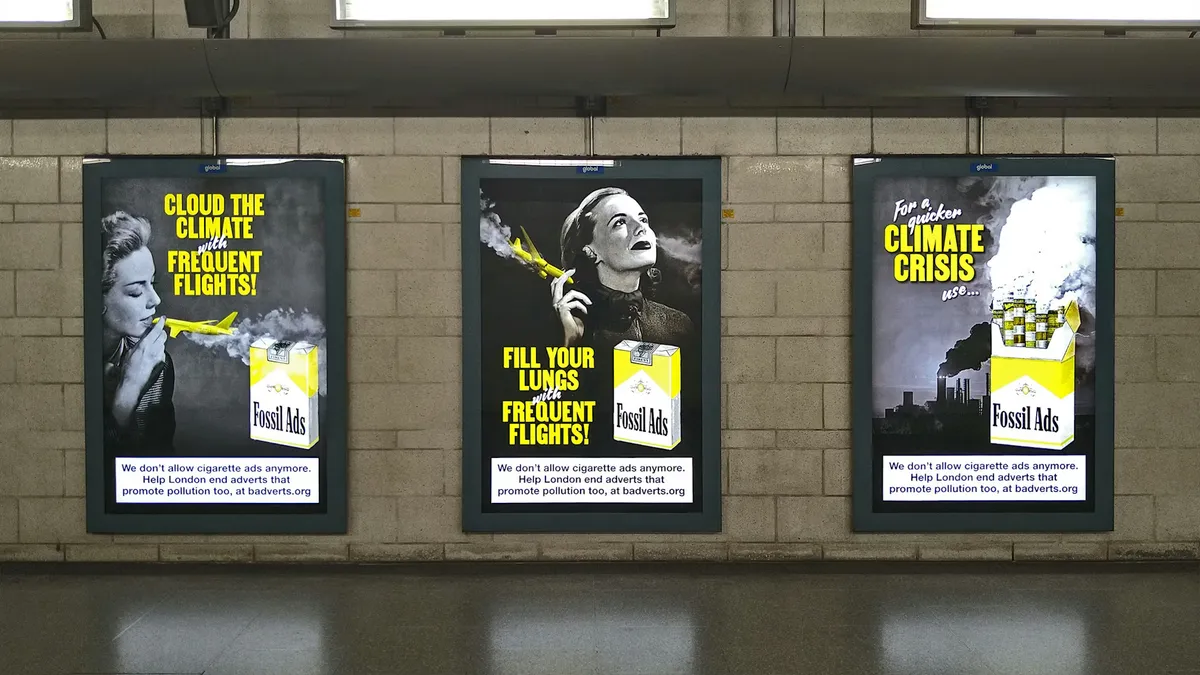
Satirical Fossil Ads Take Over a London Underground Station

30 Jan 2025 · 4 minute read
by Lilly Ashford
Tiny Parks on the London Underground: Hidden Green Gems Bringing Nature to Commuters
Our Valuable Clients, Past and Present


Schedule a call
Pick a date and time for a call that suits you.
We can go through all the available format options and any other questions you have about successfully launching your next advertising campaign.
Launch Your Tube Campaign Today!
Get your brand in front of millions of Londoners and tourists as they move through the city. Just fill in your details on the form to advertise on the London Underground and our expert team will be in touch to kickstart your journey towards standout, high-impact results.
Join thousands of brands that stand out and connect with the transport network’s users.