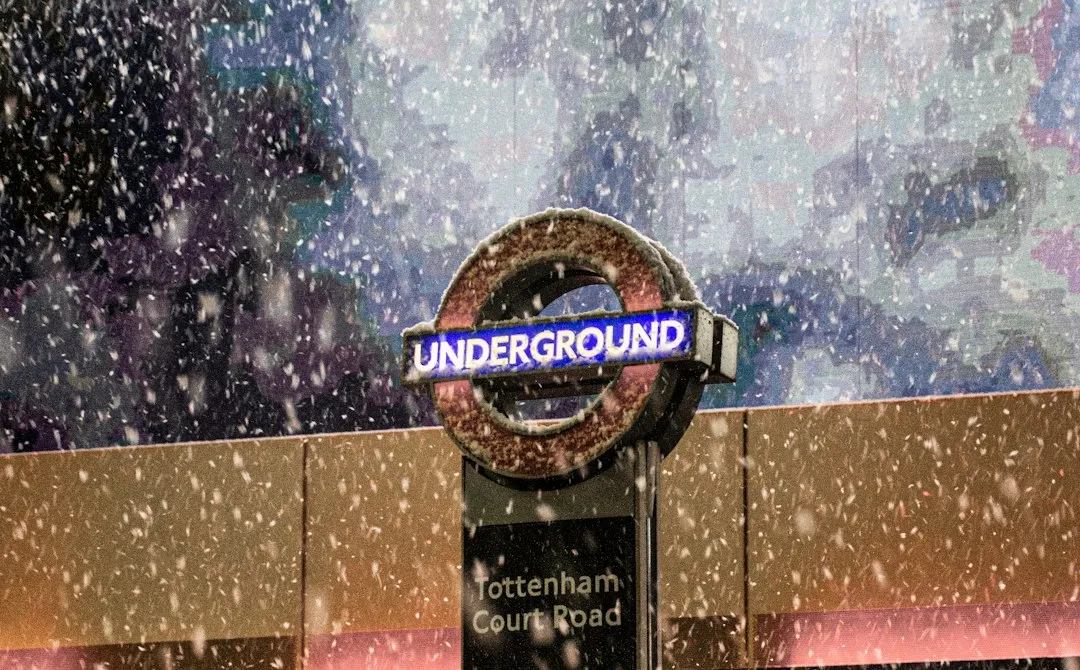
Every December, Platform 2 at Bank and the ticket hall at Leicester Square fill with red suits, fake beards, and a hundred variations on the same question: is Father Christmas getting the Central line? Santa Claus on the London Underground is no longer odd; it is predictable, highly visible, and one of the few genuinely attention-grabbing moments in a commuter's day.
For advertisers, that attention is exactly the opening Christmas requires. The Tube over the festive period becomes something more than a transport network; it becomes a contained, high-frequency channel where seasonal messages land with unusual force. A passenger sees the same 48-sheet at Green Park twice a day for three weeks. That repetition, paired with the mood shift December brings, turns the Underground into a premium opportunity for holiday brand storytelling.
Why Christmas works differently on the Tube
Advertising on the Underground in December benefits from two realities: captive audiences and forced proximity. A commuter at Oxford Circus cannot skip past a platform panel. Dwell time on escalators at Waterloo averages 47 seconds. That is long enough to read, register, and remember.
Christmas campaigns rely on frequency and familiarity. The repetition inherent in commuter travel means a brand message does not need to explain itself in a single exposure. By the third morning, passengers recognise the visual. By the fifth, they remember the tagline. For seasonal retail, entertainment, and hospitality brands, that repeated exposure during a narrow sales window is difficult to replicate elsewhere.
Context also matters. The Tube in December carries different associations than it does in July. People are thinking about gifts, plans, and deadlines. A well-placed ad for toy retailers, theatre productions, or premium grocery brands meets the audience in a moment when purchase intent is already elevated.
High footfall and concentrated reach
Certain stations become seasonal hubs. Oxford Circus, Covent Garden, Knightsbridge, Bond Street, and Piccadilly Circus all see a marked increase in passenger numbers from mid-November onward. Those stations serve shopping districts, West End theatres, and visitor attractions. An advertiser buying inventory at those locations is paying for access to an audience that has already committed time and money to December activity.
A six-sheet cluster inside Covent Garden delivers multiple exposures to tourists, after-work shoppers, and theatre-goers within a single evening. The same format at a suburban interchange reaches fewer people but still benefits from frequency. Either way, the advertising sits inside a routine journey rather than competing for attention on a busy high street.
Seasonal creative that lands at eye level
Christmas advertising on the Underground often skews visual rather than text-heavy. A strong image, bold colour palette, and minimal copy suit the format. Passengers have seconds, not minutes, and creative that works at a glance performs better than dense messaging.
Brands that understand the medium use large-scale visuals: a single product shot, a gift-wrapped package, a recognisable character. The brief is to trigger recognition, not explain a proposition. Copy might be as short as three words and a logo. That simplicity works because the repetition does the heavy lifting.
Some campaigns lean into the environment itself. Wrapped ticket gates at King's Cross, full-platform dominations at Liverpool Street, and digital screens at Canary Wharf all turn infrastructure into creative canvas. Those formats cost more but deliver a level of immersion that standard poster sites cannot match. A passenger walking through a branded ticket hall is inside the campaign, not just looking at it.
Timing and inventory pressure
Christmas inventory on the London Underground sells early. Premium locations at key stations are often booked by late summer for December deployment. Brands that wait until October will find fewer options and higher prices. The supply constraint reflects demand: advertisers know the value of the channel during the festive period, and they plan accordingly.
Campaign length also matters. A two-week run starting mid-December catches late shoppers but misses the longer planning window. A four-week run from late November covers Black Friday, Cyber Monday, and the full pre-Christmas stretch. The longer the campaign, the deeper the frequency and the stronger the recall.
That timing pressure extends to creative production. Formats must be finalised, proofed, and printed well in advance. A brand cannot decide in early December to add a Tube campaign; the lead time for booking, approvals, and installation means planning starts months earlier.
Digital screens and real-time flexibility
Digital inventory at stations like Waterloo, Victoria, and London Bridge offers one advantage over static posters: the ability to update creative quickly. A retailer can rotate offers, adjust messaging for weekday versus weekend audiences, or respond to stock levels. That flexibility is useful during a sales period when conditions change fast.
Digital also supports motion and sequence. A ten-second loop can tell a short story, show multiple products, or build a visual reveal. Static posters rely on a single strong image; digital screens can layer information across frames. Both formats work, but the choice depends on creative strategy and budget.
Why Underground advertising suits premium and challenger brands alike
Established names use the Tube to maintain visibility and remind audiences of seasonal ranges. Department stores, luxury retailers, and national grocery chains book large-format sites to signal presence. The Underground becomes part of a broader media mix that includes television, print, and outdoor citywide buys.
Challenger brands use the same channel differently. A niche toy brand, an independent theatre production, or a new hospitality concept can buy targeted inventory at specific stations and reach a concentrated, relevant audience. The Tube allows precision: a brand can choose stations by line, catchment, or passenger profile rather than buying a blanket citywide package.
Both approaches benefit from the same underlying dynamic: the Tube is unavoidable. A passenger at Holborn or Bank will see platform advertising whether they intend to or not. That passive exposure, repeated over days or weeks, builds familiarity without requiring active engagement.
Creative execution and what actually stops commuters
Strong Christmas creative on the Underground tends to be bold, simple, and emotionally direct. A striking image of a gift, a child's face, a festive table, or a recognisable product triggers an immediate association. The best campaigns do not try to explain; they evoke.
Colour plays a larger role than usual. Red, gold, deep green, and white signal Christmas instinctively. Brands that lean into those palettes benefit from cultural shorthand. A commuter processing dozens of visual messages in a single journey will register a festive-coded poster faster than one that fights seasonal expectations.
Copy should be minimal and functional. A tagline, a call to action, a date. Anything longer risks being skipped. The format rewards brevity and confidence. A single sentence that works at a glance will outperform a paragraph that requires concentration.
Avoiding the generic
The weakest Christmas advertising on the Underground is indistinguishable from every other campaign in the same category. Generic snowflakes, stock imagery of baubles, and uninspired festive typography do not break through. The strongest work either shows the product clearly or uses a single arresting visual idea that does not need decoration.
Brands that trust their identity and resist the urge to add every Christmas signifier tend to produce the most memorable work. A clean product shot with minimal festive styling can be more effective than a cluttered composition that tries to signal the season through excess.
Measuring impact and what counts as success
Advertisers measure Underground campaigns through a combination of reach data, brand tracking, and sales correlation. Passenger numbers provide reach estimates. Brand awareness studies track recall and association. Sales data, when available, show whether the campaign coincided with an uplift.
For Christmas campaigns, success often comes down to whether the brand stayed visible during the key decision-making window. A shopper at Oxford Circus in early December who sees the same brand message three times across a week is more likely to consider that brand when making a purchase later the same day. The Tube becomes part of the path to conversion rather than a standalone driver.
Frequency matters more than single exposure. A campaign that delivers fifteen opportunities to see across three weeks will build stronger recall than one that delivers thirty exposures in five days. The rhythm of commuter travel spreads those impressions across a period when purchase intent is rising.
FAQs
What makes London Underground advertising effective during Christmas?
The Underground delivers repeated exposure to a captive commuter audience during a narrow sales window. High dwell time, unavoidable placement, and frequency across key shopping and entertainment stations make it a strong channel for festive campaigns targeting purchase intent.
Which Tube stations are best for Christmas advertising campaigns?
Oxford Circus, Covent Garden, Bond Street, Knightsbridge, Piccadilly Circus, King's Cross, and Liverpool Street see elevated footfall during the festive period. These stations serve retail districts, theatres, and transport hubs, delivering concentrated reach to shoppers and visitors.
How far in advance should brands book Christmas Tube advertising?
Premium locations are often reserved by late summer. Brands planning December campaigns should finalise bookings and creative by early autumn to secure preferred inventory. Late bookings face limited availability and higher costs.
Do digital screens or static posters work better for festive campaigns on the Tube?
Digital screens offer flexibility for rotating creative and real-time updates, useful during fast-moving sales periods. Static posters deliver strong single-image impact and work well for bold, simple festive visuals. The choice depends on creative strategy and budget.
What creative approach works best for Christmas advertising on the London Underground?
Bold visuals, minimal copy, and festive colour palettes perform strongest. A single arresting image with a short tagline suits the format better than detailed messaging. Repetition across commuter journeys builds recognition, so clarity and simplicity are more effective than complexity.
"}Latest News

22 Apr 2025 · 4 minute read
by Penny Hargreaves
Piccadilly Circus: Where London’s Advertising Story Shines Brightest

12 May 2025 · 2 minute read
by Lilly Ashford
The First Baby Born on the Tube – And Why Her Name Wasn’t Really T.U.B.E.
30 May 2025 · 4 minute read
by Lilly Ashford
Why Station Takeovers on the London Underground Are the Boldest Ad Format in Town
Our Valuable Clients, Past and Present


Schedule a call
Pick a date and time for a call that suits you.
We can go through all the available format options and any other questions you have about successfully launching your next advertising campaign.
Launch Your Tube Campaign Today!
Get your brand in front of millions of Londoners and tourists as they move through the city. Just fill in your details on the form to advertise on the London Underground and our expert team will be in touch to kickstart your journey towards standout, high-impact results.
Join thousands of brands that stand out and connect with the transport network’s users.