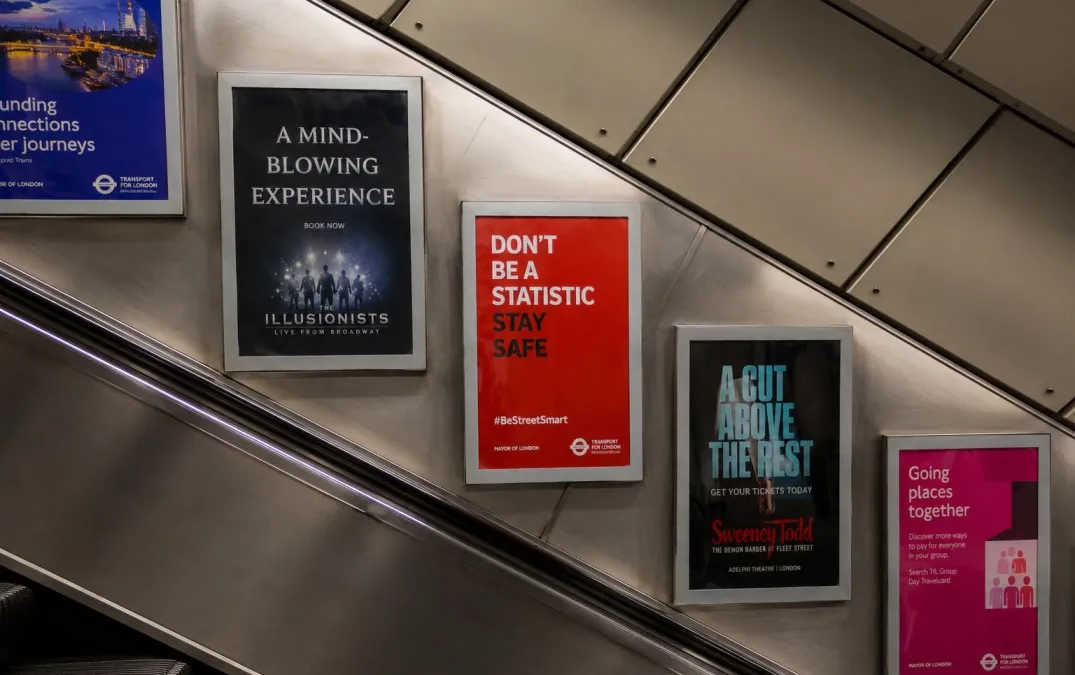
Zone 1 contains some of the London Underground’s most commercially important stations, making it a key area for Tube advertising. Every day, commuters, shoppers, tourists, students and business travellers move through these central London hubs on their way to the West End, the City, major rail terminals and some of the capital’s busiest retail and entertainment districts.
For advertisers, escalators create a useful point in that journey. Passengers travel past a sequence of advertising panels as they move between platforms, ticket halls and street level, giving brands repeated opportunities to be seen within the same station visit.
Here are some of the Zone 1 stations advertisers should consider for escalator advertising.
Why Zone 1 Works for Tube Escalator Advertising
Central London stations bring together audiences with very different reasons for travelling. Oxford Circus and Bond Street serve major shopping districts. Bank and Liverpool Street connect brands with City workers. Piccadilly Circus and Leicester Square sit within the West End’s tourism and entertainment landscape.
Escalator advertising gives brands a way to reach these audiences while they are moving through the station.
Both traditional escalator panels and digital escalator panels can form part of a campaign, depending on the station and media availability. Digital formats can also support motion and changing creative, giving advertisers more flexibility when running time-sensitive or multi-message campaigns.
Station selection should therefore start with the audience rather than simply choosing the biggest name on the Tube map.
Oxford Circus
Oxford Circus is one of the most obvious Zone 1 choices for brands targeting shoppers and West End audiences.
The station serves the Central, Victoria and Bakerloo lines and sits directly beneath the meeting point of Oxford Street and Regent Street. This puts advertisers close to one of London's most concentrated retail environments.
London Underground Advertising's station data records around 51 million annual entries at Oxford Circus, while Oxford Street attracts approximately 500,000 shoppers a day.
This makes Oxford Circus station advertising particularly relevant for:
- Fashion and beauty
- Retail
- Technology
- Entertainment
- Food and drink
- Consumer launches
Escalator panels are especially useful here because a campaign can continue the brand presence passengers may already have encountered above ground across Oxford Street and Regent Street.
For larger campaigns, escalator advertising can also be combined with other digital and static formats within the station.
Bond Street
For brands interested in luxury and premium audiences, Bond Street deserves particular consideration.
The station serves the Central and Jubilee lines, alongside the Elizabeth line, and places passengers close to Oxford Street, New Bond Street and Mayfair. It therefore attracts a combination of shoppers, tourists, office workers and local audiences.
London Underground Advertising records approximately 37 million annual station footfall at Bond Street. The station also supports both traditional and digital escalator panels.
Bond Street station advertising can be particularly relevant for:
- Luxury fashion
- Jewellery and watches
- Beauty and fragrance
- Premium automotive
- Financial services
- High-end hospitality
The surrounding environment matters here. If a brand wants to reach consumers travelling towards some of London's best-known luxury retail streets, escalator advertising allows the campaign to become part of that journey.
Tottenham Court Road
Tottenham Court Road has become an increasingly important central London interchange.
It connects the Central and Northern lines with the Elizabeth line, while its location provides access to Soho, Oxford Street, the West End and nearby entertainment and retail areas.
That creates a broad audience spanning commuters, shoppers, tourists and leisure travellers.
Tottenham Court Road station advertising supports both static and digital escalator panels, alongside formats including Digital Gateways and Digital Ribbons.
The station can work well for:
- Entertainment and streaming
- Technology
- Fashion
- Retail
- Apps and digital services
- Consumer brands
For campaigns with a larger creative idea, escalator panels can also work alongside other formats to build a more continuous presence as passengers move through the station.
Spotify, for example, has previously used Tottenham Court Road as part of its Wrapped activity, showing how a central interchange can become part of a wider campaign rather than functioning as a single advertising placement.
Piccadilly Circus
Few Tube stations have a stronger connection with London's entertainment district than Piccadilly Circus.
Its location places passengers within walking distance of Soho, Regent Street, Leicester Square and the wider West End. That makes the station relevant to tourists alongside Londoners travelling for shopping, dining, theatre and nightlife.
Escalator advertising here can suit:
- Film and entertainment
- Theatre
- Gaming
- Tourism
- Food and drink
- Fashion
- Major consumer launches
The relationship between the station and its surroundings is particularly useful. Passengers leaving the Underground enter an area already associated with large-scale advertising and entertainment, allowing an escalator campaign to introduce a message before they reach street level.
Leicester Square
Leicester Square is another strong option for campaigns built around entertainment and leisure audiences.
The station serves the Northern and Piccadilly lines and sits close to Leicester Square, Chinatown, Covent Garden and London's theatre district.
That makes escalator placements relevant for brands looking to reach people travelling to cinemas, theatres, restaurants, events and other West End destinations.
Potential categories include:
- Film releases
- Streaming platforms
- Theatre productions
- Gaming
- Restaurants
- Tourism
- Events and experiences
Timing can be important here. Entertainment campaigns can be planned around release dates, performances and events, while leisure brands may place greater emphasis on evening and weekend audiences.
Bank and Monument
Not every Zone 1 escalator campaign needs to focus on shoppers and tourists.
Bank and Monument sit at the centre of London's financial district and connect several Underground lines with the DLR. The stations serve people travelling into and around the City, making the environment relevant for campaigns targeting professional and business audiences.
Brands that could consider the area include:
- Financial services
- Fintech
- Technology
- Business software
- Recruitment
- Professional services
- Business travel
The value of Bank is therefore less about being a universally suitable advertising location and more about audience alignment.
A financial technology campaign may find the surrounding audience particularly relevant, while a retail campaign could be better placed at Oxford Circus or Bond Street.
Liverpool Street
Liverpool Street combines Underground travel with one of London's major National Rail terminals.
The wider station connects the Central, Circle, Hammersmith & City and Metropolitan lines, alongside the Elizabeth line and National Rail services.
Its position between the City and areas such as Shoreditch also creates an interesting mix of audiences, including office workers, commuters, visitors and people travelling into London's hospitality and leisure districts.
Escalator advertising here can therefore suit sectors including:
- Finance
- Technology
- Recruitment
- Travel
- Business services
- Consumer brands
For advertisers trying to reach commuters entering central London, Liverpool Street can also form part of a broader multi-station campaign alongside other major rail interchanges.
London Bridge
London Bridge combines Underground and National Rail journeys with access to a major employment, tourism and hospitality area.
The station serves the Jubilee and Northern lines, while the surrounding area includes London Bridge, Borough Market, The Shard and businesses along the South Bank.
This creates opportunities for brands targeting commuters as well as leisure audiences.
Relevant categories can include:
- Financial and professional services
- Food and drink
- Tourism
- Entertainment
- Technology
- Recruitment
As with other interchange stations, the campaign should account for how passengers actually move through the station. Escalator locations, direction of travel and the wider passenger journey can all affect which placements make sense.
King's Cross St Pancras
King's Cross St Pancras has a different audience profile from many West End stations.
Alongside six Underground lines, the wider transport hub connects passengers with National Rail services and international Eurostar journeys from St Pancras International.
That makes it particularly useful for advertisers interested in reaching a mixture of London commuters, domestic travellers and international visitors.
Potential sectors include:
- Travel and tourism
- Technology
- Financial services
- Entertainment
- Hospitality
- Consumer brands
For national campaigns, King's Cross can also help connect a London Underground media plan with audiences travelling into the capital from elsewhere in the UK.
Victoria
Victoria is another important Zone 1 interchange where local and longer-distance journeys meet.
The Underground station serves the Victoria, District and Circle lines, while the wider Victoria transport hub connects with National Rail services. The surrounding area also includes hotels, theatres, offices and major visitor destinations.
This makes Victoria relevant for:
- Travel
- Tourism
- Entertainment
- Hospitality
- Financial services
- Consumer campaigns
For advertisers targeting people arriving in central London, escalator panels can introduce the campaign as passengers transition from transport services towards the wider city.
Which Zone 1 Station Should You Choose?
There is no single best Zone 1 station for every escalator campaign.
It all depends on where your target audience travels.
For example:
- Luxury and premium retail: Bond Street
- Fashion and mass-market retail: Oxford Circus
- Entertainment and culture: Piccadilly Circus or Leicester Square
- Business and finance: Bank or Liverpool Street
- Broad West End audiences: Tottenham Court Road
- Domestic and international travellers: King's Cross St Pancras
- Commuter and visitor audiences: Victoria or London Bridge
Campaigns do not need to be limited to one station either. Selecting several stations around the same audience can create repeated exposure at different points in their journey.
Choosing the Right Tube Escalator Advertising Format
Station selection is only one part of the plan.
Traditional escalator panels provide repeated static placements alongside the escalator journey. Digital Escalator Panels, or DEPs, introduce digital creative into the same environment and can support motion and multiple executions where available.
The right option depends on the campaign, station, creative and budget.
Advertisers can also combine escalator media with formats such as Digital Gateways, Digital Ribbons, 6 Sheets and larger station displays when they want a stronger presence within a particular location. London Underground Advertising's current station pages show, for example, that Oxford Circus, Bond Street and Tottenham Court Road offer both static and digital escalator panel opportunities.
Planning Escalator Advertising Across Zone 1
The strongest Zone 1 plan is built around audience movement rather than simply booking the busiest stations available.
Consider where your audience works, shops, socialises and changes between services. Then look at which stations and escalator environments place the campaign naturally within those journeys.
At London Underground Advertising, we can help you identify suitable london underground advertising locations and formats based on your target audience, campaign objectives and budget. From a focused placement at one Zone 1 station to a wider multi station escalator campaign, our team can support the planning, booking and delivery of your campaign.
Latest News

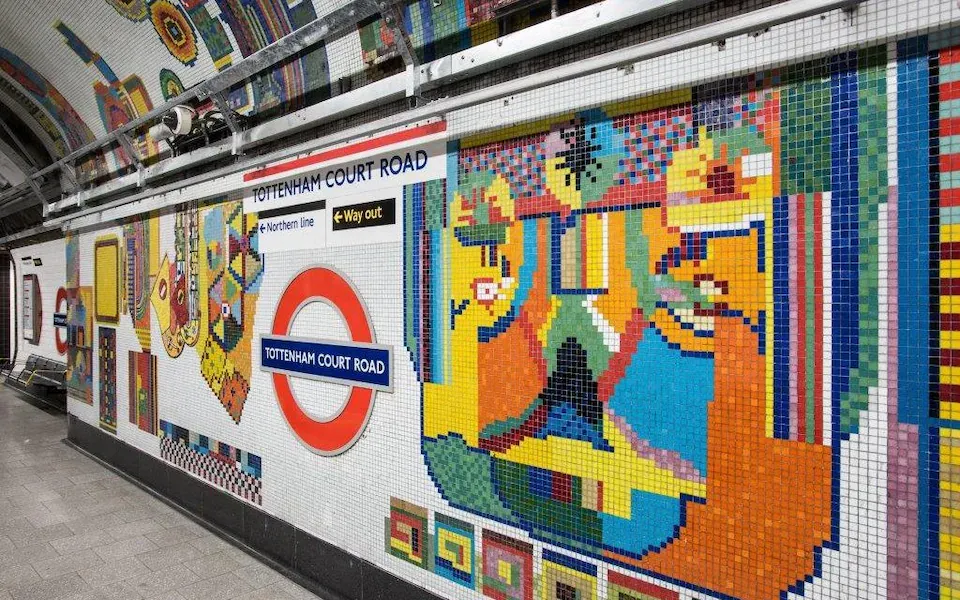
18 Mar 2026 · 2 minute read
by Charlotte Williams
Public Art on the London Tube: A Decade of Creativity
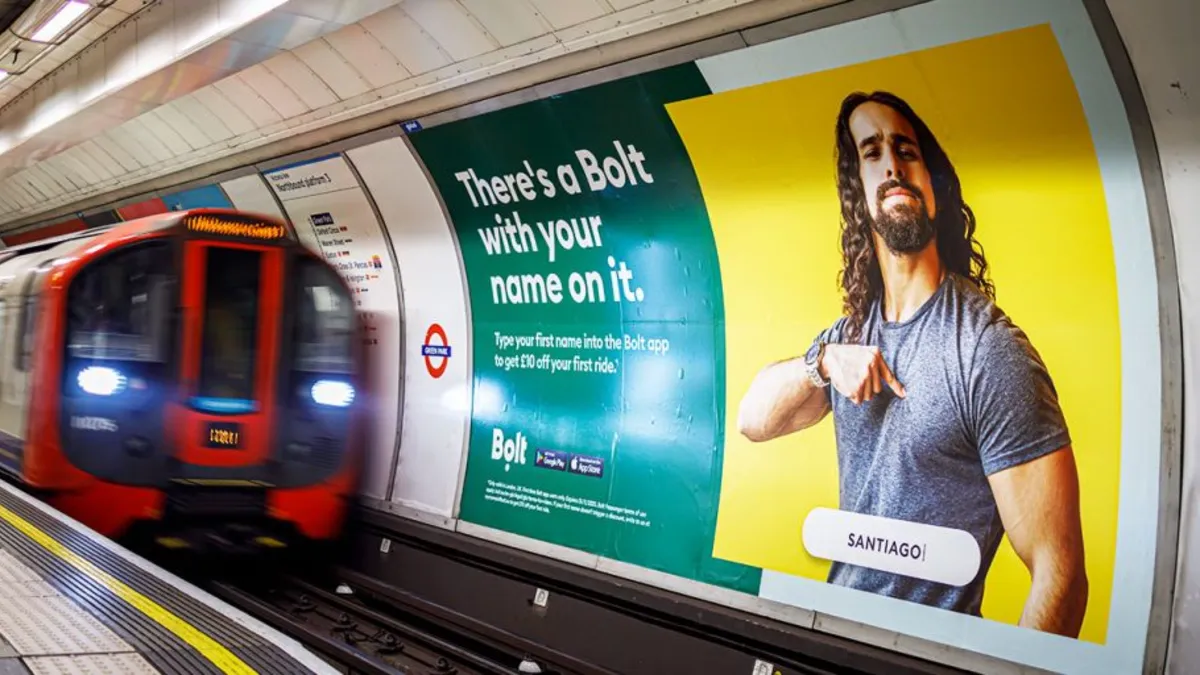
07 Oct 2025 · 5 minute read
by Penny Hargreaves
New Piccadilly Line Trains Set to Run in a Year, Bringing Fresh Advertising Opportunities
Our Valuable Clients, Past and Present


Schedule a call
Pick a date and time for a call that suits you.
We can go through all the available format options and any other questions you have about successfully launching your next advertising campaign.
Launch Your Tube Campaign Today!
Get your brand in front of millions of Londoners and tourists as they move through the city. Just fill in your details on the form to advertise on the London Underground and our expert team will be in touch to kickstart your journey towards standout, high-impact results.
Join thousands of brands that stand out and connect with the transport network’s users.