An escalator journey might last less than a minute, but that is enough time to tell a story.
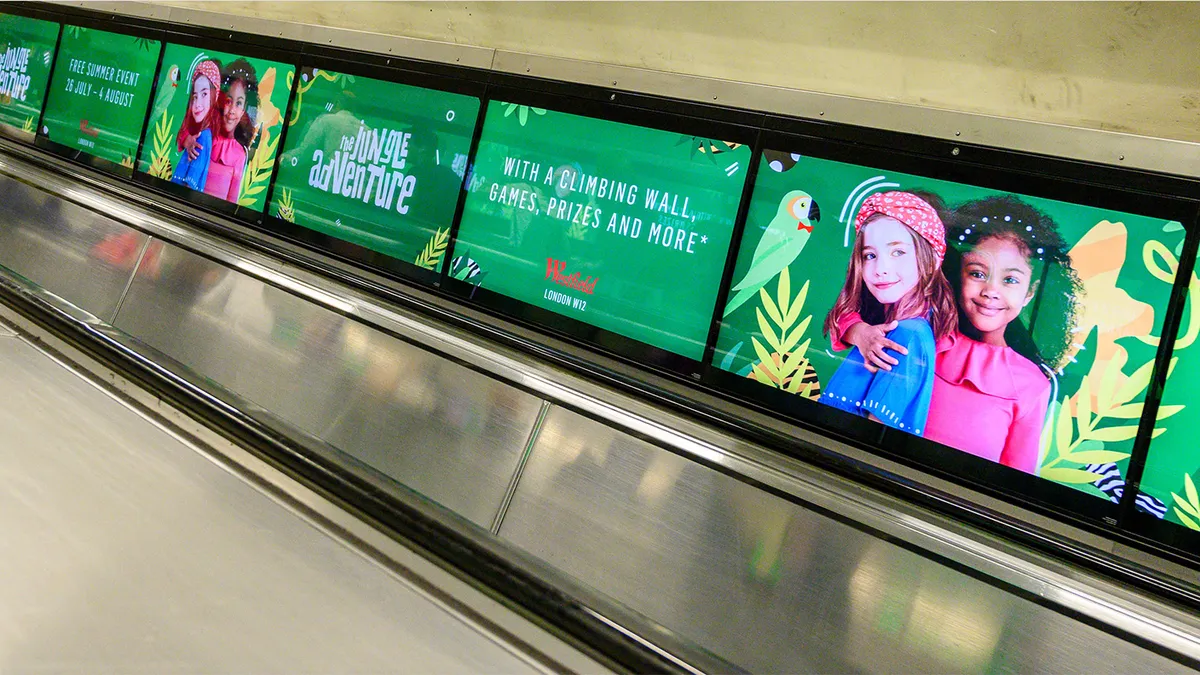
Synchronized escalator advertising uses a sequence of digital screens positioned along an escalator to deliver coordinated creative. Instead of treating every screen as an isolated advert, the content is designed to work across the full run as passengers travel past it.
A product can appear to move from screen to screen. A message can develop in stages. Characters can travel alongside passengers. One visual can build towards a final reveal.
On the London Underground, this approach uses Digital Escalator Panels to turn the journey between station levels into a connected advertising experience.
What Is Synchronized Escalator Advertising?
Synchronized escalator advertising is a form of digital out of home advertising where multiple screens along an escalator display coordinated creative.
The screens are positioned in sequence along the passenger's direction of travel. Creative can then be designed so each display contributes to a larger idea.
A campaign could introduce a product on the first screens, communicate key features through the middle of the run and finish with the brand and call to action.
Another campaign could use animation that appears to travel alongside passengers.
The important principle is sequence.
Passengers encounter a series of connected creative moments as the escalator carries them through the station.
Transport for London identifies escalators as environments for static and animated digital advertising, with digital panels forming part of the Underground advertising estate.
From One Screen to the Next
The format brings together screen placement, creative sequencing and timing. As passengers travel along the escalator, they pass a series of Digital Escalator Panels designed to work together as one connected campaign.
This allows a message, product or visual idea to develop throughout the journey.
1. The First Screens Set Up the Idea
The opening screens introduce the campaign.
This could be a product, character, message or visual that immediately gives passengers context.
The creative should make sense quickly. Passengers can enter the sequence at slightly different points, so the campaign should remain understandable without relying on one exact starting frame.
2. The Creative Develops Along the Escalator
As passengers continue their journey, each screen can introduce another part of the idea.
A product can appear to move from one display to the next. Individual words can build a message. Characters can travel alongside passengers. A sequence can gradually reveal a new product or release.
The passenger's physical movement becomes part of how the campaign is experienced.
3. Timing Connects the Screens
The content is coordinated across the screen run so individual displays feel connected.
This creates the synchronized effect. Instead of every panel showing the same advert independently, the screens can work together to create movement, progression or a simple narrative.
The strongest executions are usually designed specifically around the escalator environment.
4. The Final Screens Deliver the Payoff
The last part of the sequence can reinforce the key message, product or brand.
For an entertainment campaign, this might be the release date. For a product launch, it could be the full product reveal. For a retail campaign, it might be an offer or call to action.
By this point, passengers have already encountered several connected parts of the campaign.
Why Synchronization Works Well on Escalators
Escalators give advertisers something valuable, predictable audience movement.
Passengers travel in a fixed direction and at a controlled pace, while the advertising screens sit along that journey.
This gives creative teams a clear sequence to work with.
The Audience Moves Through the Story
The passenger is already moving through the advertising environment.
Creative can use this movement to make a character, product or graphic appear to progress alongside the audience.
It gives the physical location an active role in the campaign idea.
Several Screens Can Build One Message
Each screen can contribute another piece of information.
This can work particularly well for simple narratives, product demonstrations, sequential copy and character led creative.
The message should remain concise. Passengers should be able to understand the idea without needing to study every individual screen.
Passengers Have Time to See the Sequence
Escalators connect different levels of a station, creating a period where passengers are moving steadily in one direction.
TfL's station design guidance identifies escalators as environments with useful dwell time for advertising.
That makes the setting suitable for creative that develops over several displays.
What Does a Synchronized Escalator Campaign Look Like?
A real campaign provides a useful example.
Disney+ used sequential digital screens on Tube escalators to make well known characters appear to travel alongside passengers.
Characters including Homer Simpson, Elsa and Buzz Lightyear moved through the screen sequence in sync with the escalator journey.
You can see the execution in our coverage of Disney+ characters on Tube escalators.
The campaign demonstrates an important principle for this format. The creative used the physical movement of the escalator as part of the idea rather than simply placing conventional video content on multiple screens.
How Should Creative Be Designed for the Format?
Creative planning should begin with the passenger journey.
The key question is simple: what should happen as someone travels past the screens?
Keep the Story Simple
The sequence needs to communicate quickly.
One clear idea gives passengers a better chance of following the campaign during their escalator journey.
A straightforward structure could be:
Hook → development → reveal → brand
The exact sequence can change according to the campaign, but each stage should have a clear purpose.
Design for the Full Screen Run
Think about the displays as a connected sequence rather than separate advertising spaces.
The first screens might establish the idea. The middle screens can introduce movement or additional information. The final screens can deliver the main message or reveal.
The number and arrangement of displays depend on the available media run, so creative should be developed around the actual placement being booked.
Use Motion With Purpose
Movement should support the campaign idea.
Products travelling through the sequence, characters moving alongside commuters or graphics progressing between screens can make good use of the environment.
Complex animation can make the message difficult to follow, particularly in busy stations. Clear movement with an obvious purpose is usually easier for passengers to understand.
Keep the Brand Visible
Passengers may notice a campaign at different stages of the sequence.
Brand recognition should therefore not depend entirely on the final screen.
Consistent colours, products, logos or other distinctive brand assets can help make the advertiser identifiable throughout the experience.
Digital Escalator Panels and Digital Ribbons
Both formats use the escalator environment, but their physical setups differ.
Digital Escalator Panels use individual digital screens positioned in runs alongside the escalator. Coordinated content can make these separate displays work together as one sequence.
A Digital Ribbon creates a long continuous digital display alongside the escalator.
TfL documentation describes Digital Ribbons as continuous escalator screens, while Digital Escalator Panels are installed as runs of individual digital displays.
The appropriate format depends on the station, media availability, campaign objective, creative idea and budget.
Which Stations Work Well for Escalator Advertising?
Station selection should start with the audience the brand wants to reach.
Major Central London stations serve different combinations of commuters, residents, shoppers, tourists and business travellers.
Oxford Circus provides access to West End shoppers, workers and visitors. King's Cross St Pancras connects Underground journeys with national and international rail travel. Victoria serves commuters, tourists and passengers connecting with mainline services.
Other Zone 1 stations can support campaigns focused on business districts, retail destinations, entertainment areas and visitor routes.
Passenger profile, station layout, screen availability and campaign objectives should all influence the final selection.
Which Campaigns Suit Synchronized Escalator Advertising?
The format is particularly useful when the creative idea benefits from movement, progression or a reveal.
Suitable campaigns can include:
- Film and television releases
- Streaming launches
- New products
- Gaming releases
- Fashion and beauty campaigns
- Technology products
- Retail promotions
- Travel campaigns
- Events and attractions
- Brand awareness activity
It can also form part of a wider London Underground advertising plan.
For example, synchronized escalator creative could create a memorable experience at selected stations while platform advertising, digital displays or Tube Car Panels reinforce the campaign elsewhere in the passenger journey.
What Should Advertisers Plan Before Booking?
A synchronized campaign needs coordination between media selection and creative production.
Before booking, advertisers should consider five areas.
Audience
Who does the campaign need to reach? This should guide station and location selection.
Message
What should passengers remember after seeing the sequence? Start with one clear takeaway.
Movement
How will the creative use the passenger's journey along the escalator? The answer should influence the concept from the beginning.
Screen configuration
How many screens are available and how are they positioned? The sequence needs to be designed around the actual media placement.
Wider campaign
Will other Tube formats support the escalator activity? Additional placements can extend the message into other stages of the journey.
Advertisers should also allow sufficient time for media availability checks, creative specifications, artwork production, approvals and scheduling.
Planning a Synchronized Escalator Campaign in London
Successful synchronized escalator advertising brings the location, passenger journey and creative idea together.
The station determines the audience and available media environment. The screen run shapes how the sequence can develop. The creative determines whether passengers experience the screens as one connected idea.
London Underground Advertising helps brands plan campaigns across Tube advertising formats, including Digital Escalator Panels, traditional Escalator Panels, Digital Ribbons and others in station media.
We can help identify suitable stations, check current availability, plan the media mix and coordinate creative specifications, bookings and campaign delivery.
For brands with an idea that benefits from movement and sequence, synchronized escalator advertising can turn a routine Tube journey into a distinctive part of the campaign.
Latest News
03 Jun 2026 · 5 minute read
by Khuzaima Yamman
How Luxury Brands Use London Underground Advertising to Build Brand Awareness
Our Valuable Clients, Past and Present


Schedule a call
Pick a date and time for a call that suits you.
We can go through all the available format options and any other questions you have about successfully launching your next advertising campaign.
Launch Your Tube Campaign Today!
Get your brand in front of millions of Londoners and tourists as they move through the city. Just fill in your details on the form to advertise on the London Underground and our expert team will be in touch to kickstart your journey towards standout, high-impact results.
Join thousands of brands that stand out and connect with the transport network’s users.