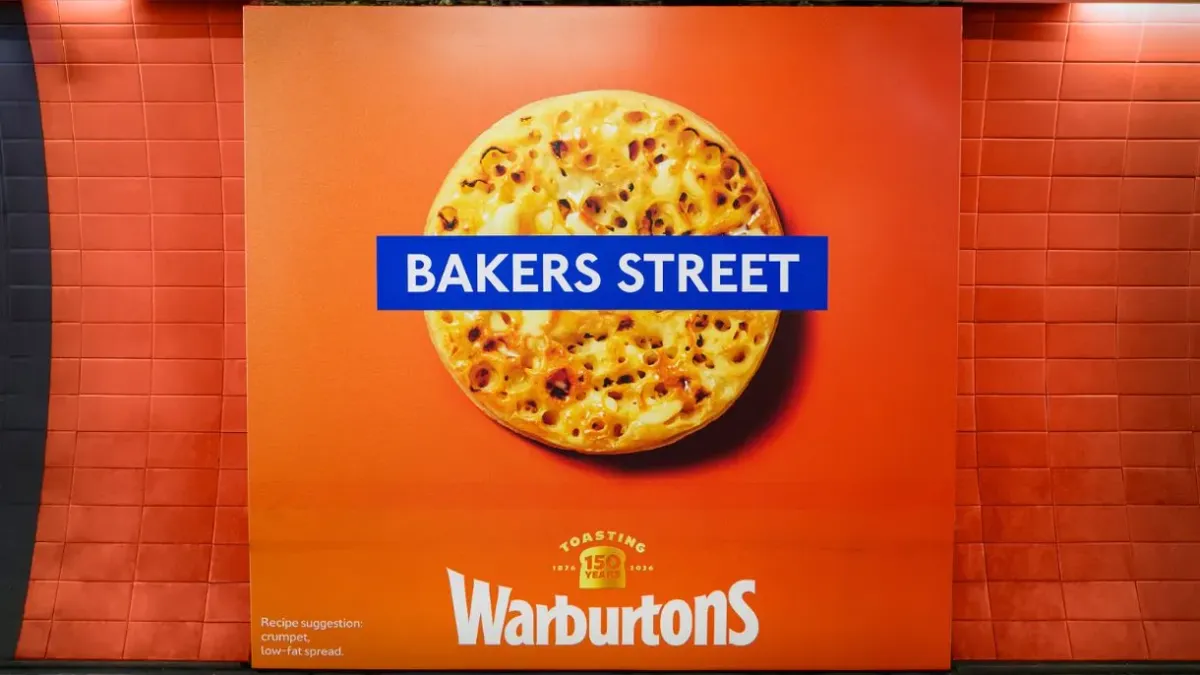
Warburtons has returned with another attention-grabbing campaign, this time bringing Morgan Freeman’s unmistakable voice to Baker Street station. Commuters moving through the London Underground are met with something unexpected. A familiar tone cuts through the routine of travel and turns a standard announcement into a moment.
It is a simple idea on paper. In practice, it shows a clear understanding of how people experience the Tube and what it takes to be noticed within it.
A campaign built for the pace of the Tube
The London Underground does not reward complexity. People are moving, often distracted, and rarely in the mindset to engage with long-form advertising. What works here is immediacy.
Warburtons leans into that reality. The campaign does not attempt to tell a layered story or build a narrative over time. Instead, it lands quickly. The voice is recognised. The location makes sense. The connection to the brand is clear enough to register in passing.
That economy of thinking is what makes it effective.
It is the same principle behind many successful placements across the network, particularly in high dwell-time environments such as platforms and escalators where even a few seconds of attention can translate into recall. Formats like station takeovers are built around this idea, allowing brands to dominate a space and deliver a message repeatedly without needing to complicate it.
Why recognisable voices still matter
There is a reason brands continue to invest in well-known talent, especially in outdoor environments. Recognition does the work that copy often cannot.
Morgan Freeman’s voice carries a set of associations that audiences already understand. It signals authority, familiarity, and a certain cultural weight. When that voice appears somewhere unexpected, such as a Tube platform, it creates a moment of friction. People notice.
That moment is enough.
Rather than building awareness from scratch, the campaign borrows it. It compresses the time needed to engage and replaces explanation with recognition. On a network where attention is measured in seconds, that trade-off is valuable.
For brands operating at a mid-level budget, this approach can be particularly efficient when paired with consistent formats like digital 6 sheets. Repetition across the network reinforces the initial impact without requiring additional complexity in the creative.
The role of place in making the idea land
Baker Street is doing more work here than it might first appear. The name alone creates a natural link to the product. That alignment removes the need for heavy messaging.
Beyond the wordplay, the station itself is one of the most strategically valuable on the network. It sits in Zone 1, connects multiple lines, and attracts a steady mix of commuters and visitors. Campaigns placed here are not just seen. They are experienced repeatedly across different journeys.
This is where Tube advertising often outperforms other channels. The environment is not neutral. It shapes how the message is received. When the creative and the location align, even a light-touch idea can feel significant.
A more disciplined use of celebrity
Warburtons has used celebrity talent before, often in more traditional formats. This execution feels more restrained.
There is no extended film, no elaborate storyline, and no need for the audience to follow along. The idea is contained within a single interaction. You hear the voice, you make the connection, and you move on.
That restraint is not a limitation. It is a reflection of how campaigns now need to behave, particularly in out of home environments. The most effective ideas are often the ones that leave space for the audience to complete them.
What this means for brands on the London Underground
There is a tendency to assume that impact on the Tube requires scale or complexity. Campaigns like this suggest otherwise.
What matters more is alignment. The idea, the placement, and the execution need to work together without friction. When they do, even a brief interaction can deliver a lasting impression.
For brands exploring formats such as 48 sheets or ticket gateways, the same principle applies. Visibility alone is not enough. The message has to land instantly and feel relevant to its surroundings.
The Warburtons campaign succeeds because it respects the medium. It does not ask for too much attention. It earns just enough.
FAQs
Why do simple campaigns work well on the London Underground
Because commuters have limited time and attention, messages that can be understood instantly are more likely to be remembered.
How does location influence Tube advertising performance
Stations with high footfall and strong contextual links to the campaign can significantly increase engagement and recall.
Is celebrity talent necessary for Tube campaigns
Not always, but recognisable talent can accelerate attention and make campaigns more memorable in busy environments.
Which London Underground formats are best for brand awareness
High-visibility formats such as station takeovers, 48 sheets, and digital screens are commonly used to maximise reach and impact.
Latest News

21 Jul 2025 · 4 minute read
by Penny Hargreaves
Tube 4G and 5G expansion unlocks powerful new advertising formats
04 Dec 2025 · 5 minute read
by Anisha Lyall
Your Guide to New Year’s Eve in London: Key Events and How to Get Around the City
28 Jan 2026 · 3 minute read
by Charlotte Williams
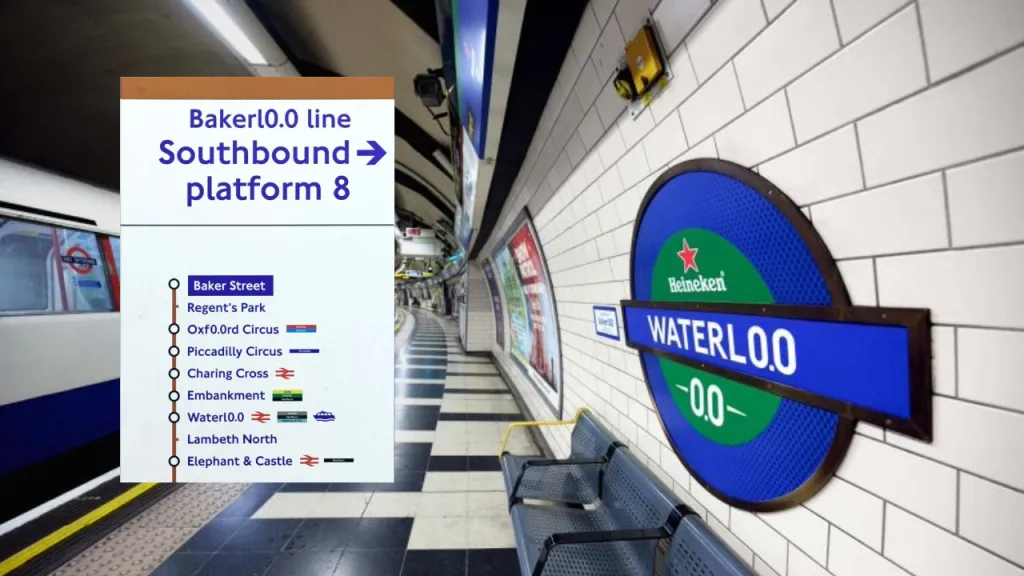
Heineken 0.0’s Bakerl0.0 Tube Takeover and the Power of Imperfect OOH Moments
Our Valuable Clients, Past and Present


Schedule a call
Pick a date and time for a call that suits you.
We can go through all the available format options and any other questions you have about successfully launching your next advertising campaign.
Launch Your Tube Campaign Today!
Get your brand in front of millions of Londoners and tourists as they move through the city. Just fill in your details on the form to advertise on the London Underground and our expert team will be in touch to kickstart your journey towards standout, high-impact results.
Join thousands of brands that stand out and connect with the transport network’s users.